Project Overview:
The "Site Management UI" project emerged as a need for an advanced web application that enables efficient management of energy facilities, devices, and resources in the field of renewable energy sources.
When I joined the Uneti Labs team, I encountered a vision for a complex platform that should enable organizations and technical teams to centrally manage energy sites, monitor performance, and analyze data in real-time.
Biggest Challenge: The biggest challenge was developing a scalable application that can display and manage large amounts of data from different energy facilities simultaneously, with support for
complex dashboards, interactive maps, real-time analysis, and multi-tenant architecture. Particularly challenging was implementing a system that can dynamically generate types based on OpenAPI
specification, create reusable UI components with support for different types of energy devices (solar panels, batteries, generators), and provide a seamless user experience across multiple
levels of organizational hierarchy.
Implementation: The implementation lasted over a year of continuous iterations, during which I developed a complete front-end system using React 18, TypeScript, Tanstack Router and Query
libraries for state management. I focused on creating a modular architecture with feature-based structuring, automated type generation using the Orval library, implementation of
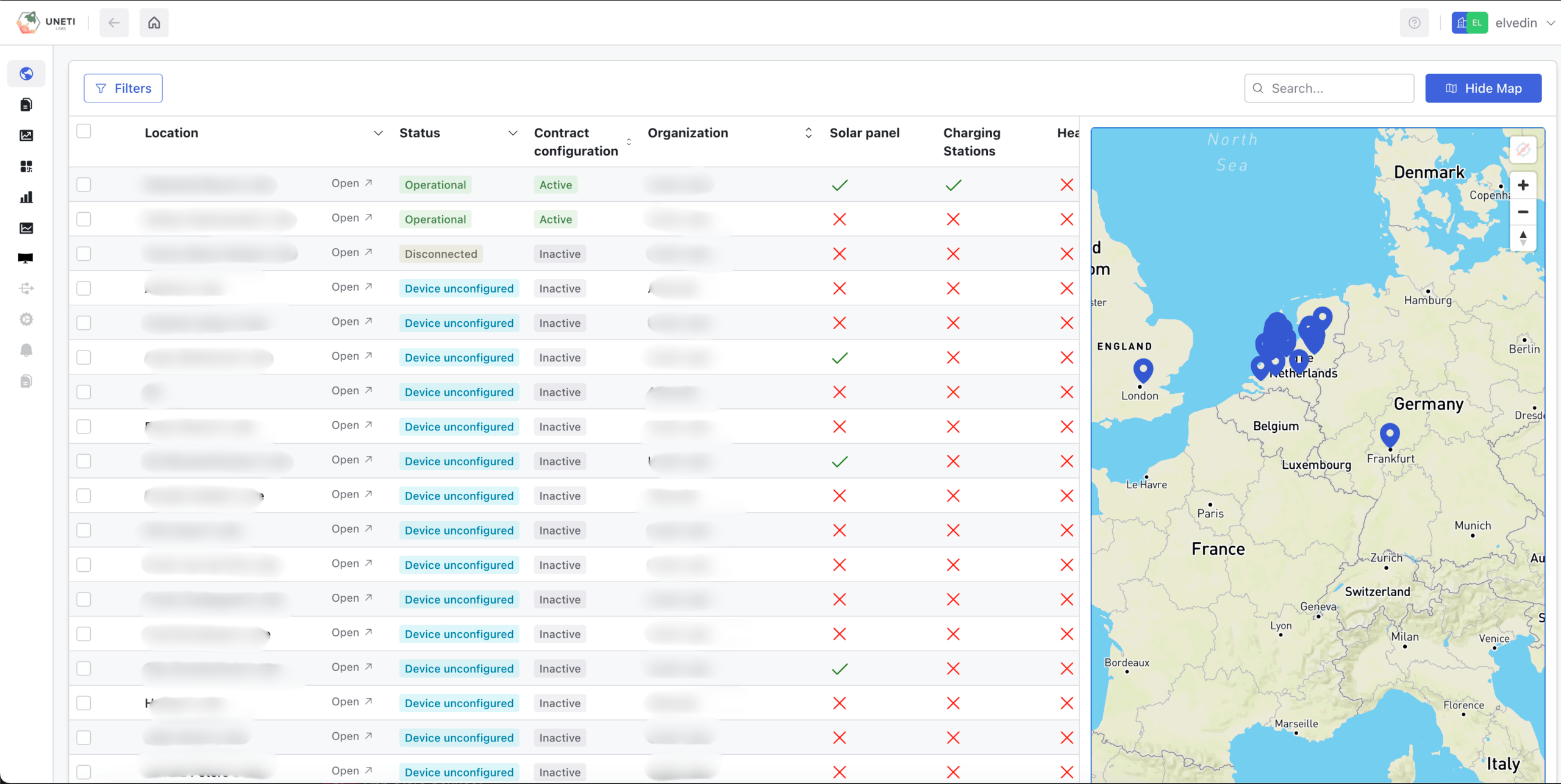
advanced data tables with sorting and filtering, interactive maps with Mapbox integration, real-time dashboards with Chart.js visualizations, and a complete user management system with
CASL-based permissions.
Final Results: The Site Management UI application became a central platform that enables energy companies to manage hundreds of facilities through a unified interface. The system processes
millions of data points daily, supports a multi-organizational tenant model, enables real-time monitoring of energy performance and financial analysis. The application resulted in a 40% reduction in
operational costs, improved response time to problems, and a significant increase in the efficiency of managing energy portfolios.


 English